XTRUST-6G Presents Trusted and Resilient Cybersecurity Solutions for Future 6G Critical Infrastructures
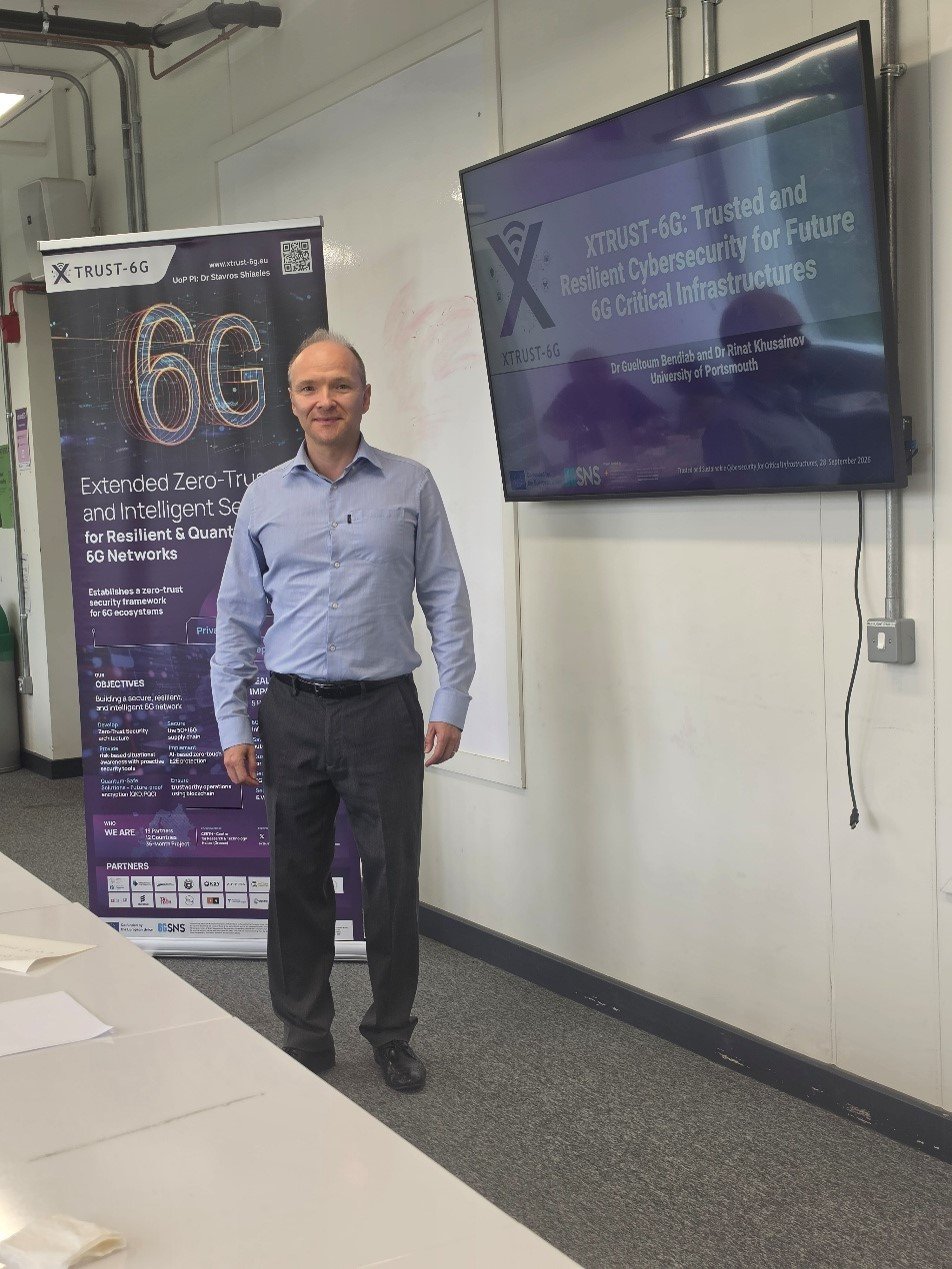
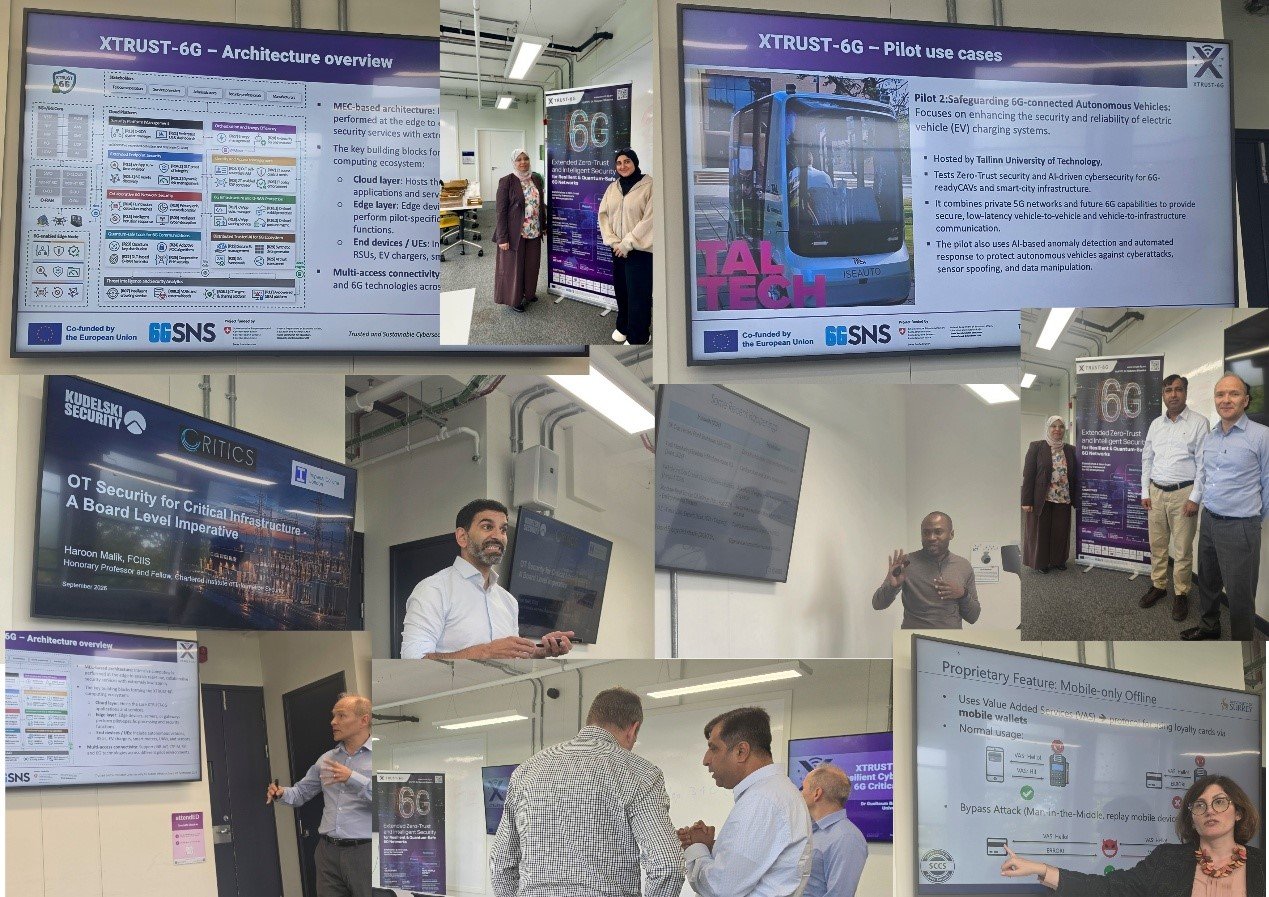
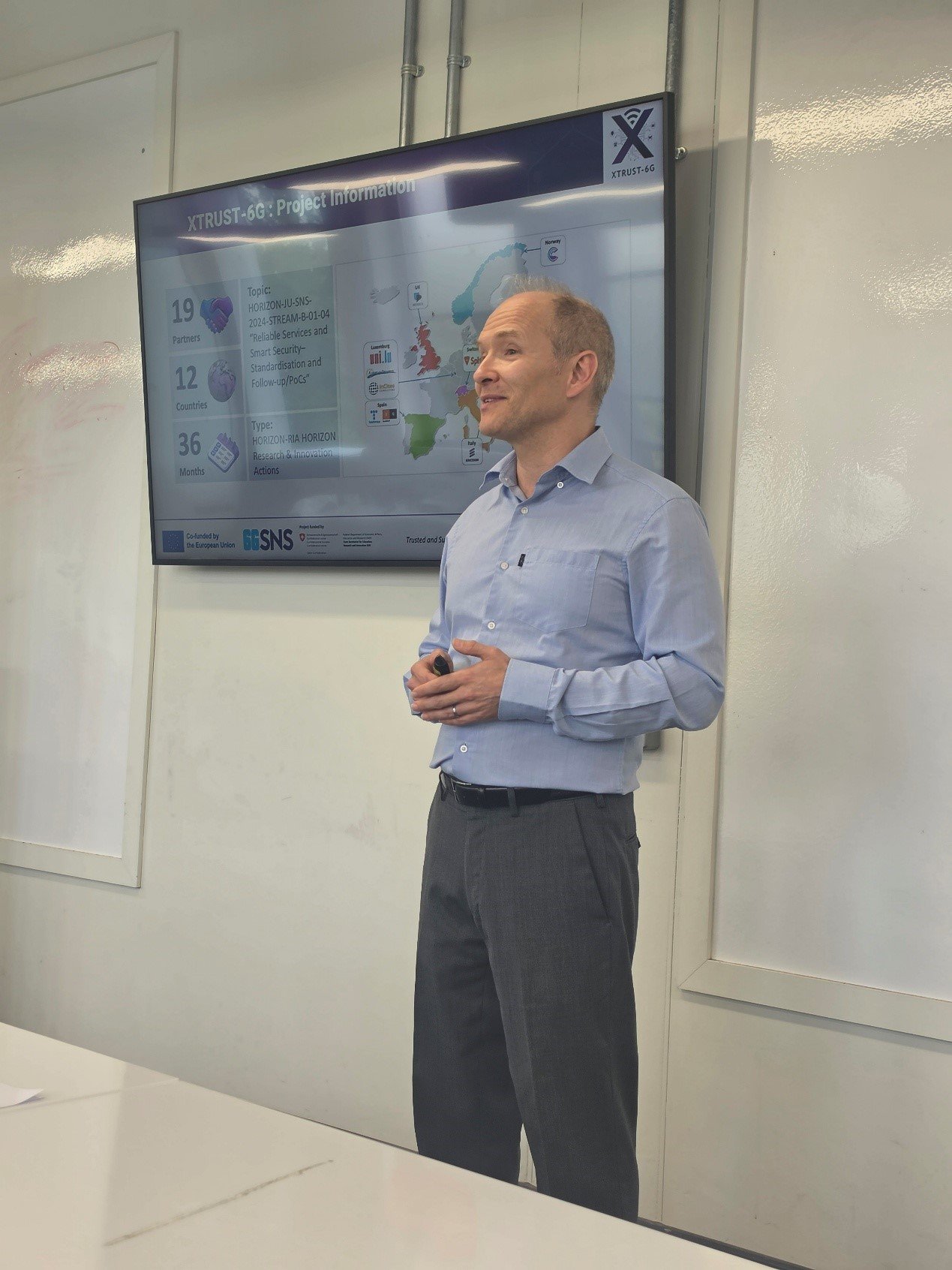
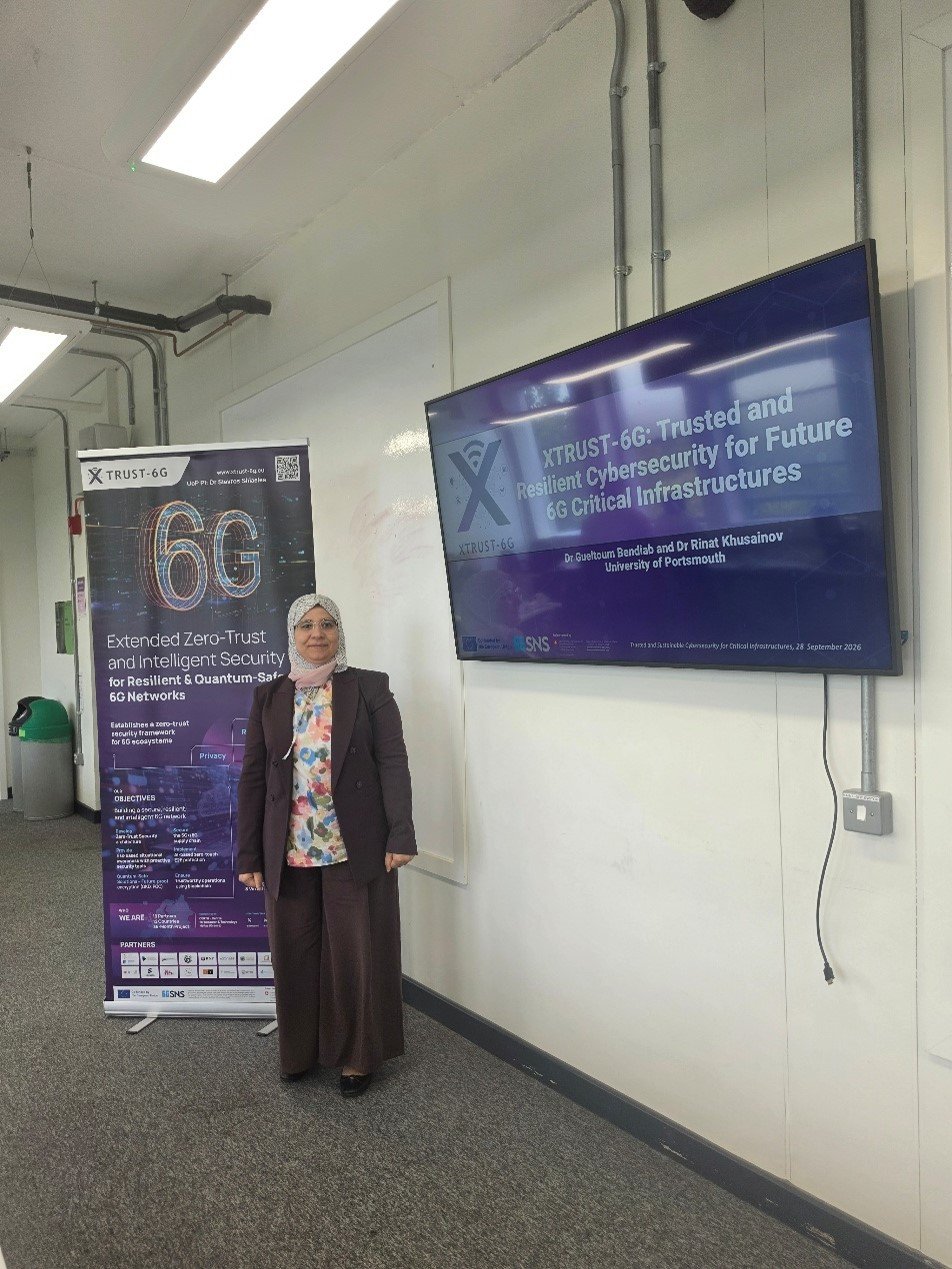
On 28 September 2026, XTRUST-6G was represented at the “Trusted and Sustainable Cybersecurity for Critical Infrastructures” event, held at Imperial College London, United Kingdom, where Dr. Gueltoum Bendiab and Dr. Rinat Khusainov from the University of Portsmouth (UPORT) presented the project’s approach to trusted and resilient cybersecurity for future 6G critical infrastructures.
Their presentation, entitled “XTRUST-6G: Trusted and Resilient Cybersecurity for Future 6G Critical Infrastructures,” explored why the evolution towards highly connected, intelligent and distributed 6G ecosystems creates new cybersecurity requirements for critical services and infrastructures.
Securing an increasingly connected 6G ecosystem
The presentation highlighted the role that 6G is expected to play across critical services and public infrastructure, smart energy and EV charging, autonomous transportation, UAV and emergency operations, industrial systems, massive IoT, cloud-edge-RAN infrastructures and connected healthcare.
At the same time, this increasing connectivity introduces new cybersecurity challenges. These include a growing attack surface, highly distributed cloud-edge-RAN environments, vulnerabilities associated with open and virtualised architectures such as O-RAN, AI/ML-enabled attacks, software supply-chain risks and continuously evolving cyber threats. The presentation emphasised that traditional perimeter-based security is no longer sufficient for such distributed environments, reinforcing the need for continuous monitoring, adaptive protection and Zero-Trust approaches.
The XTRUST-6G approach
Dr. Bendiab and Dr. Khusainov presented how XTRUST-6G is addressing these challenges through a comprehensive security framework combining micro-segmentation of critical O-RAN assets, Zero-Trust security, AI-driven intrusion detection, quantum-safe technologies, privacy-preserving AI/ML and enhanced software supply-chain security.
The presentation also introduced the project’s architecture, which combines cloud, edge and end-device environments to support collaborative, low-latency security services. XTRUST-6G solutions span areas including Zero-Trust identity and access control, O-RAN and O-Cloud security, quantum-safe security through QKD and PQC, trusted and privacy-preserving AI, cyber-threat intelligence, automated security orchestration and response, and collaborative detection.
From research to real-world validation
A key part of the presentation focused on the five XTRUST-6G pilot use cases, demonstrating how the project’s technologies will be validated in different operational environments.
The pilots address 6G-enabled EV charging infrastructure resilience, security for connected autonomous vehicles, Quantum Key Distribution for end-to-end 6G security, secure UAV-assisted communications, and protection of O-RAN and virtualised 6G infrastructures. Together, they provide environments for validating XTRUST-6G technologies against cybersecurity challenges affecting future networks and critical infrastructures.
University of Portsmouth’s contribution to intelligent 6G security
The presentation also provided a closer look at UPORT’s technical contribution to XTRUST-6G. The team is developing a scalable and intelligent Collaborative Extended Detection and Response (C-XDR) intrusion detection framework for distributed cloud, edge and 6G/O-RAN environments.
The approach combines multi-layer threat detection across O-RAN, SMO and O-Cloud environments with AI-enabled detection, while Federated Learning supports privacy-preserving collaborative detection. Unified logging, telemetry collection, correlation and visualisation are also used to provide centralised security visibility across the distributed environment.
The UPORT team additionally presented CloudHawk, alongside its work on a Zero-Trust Policy Enforcement Gateway designed to enable dynamic and risk-adaptive access control in 6G environments. The proposed approach goes beyond conventional authentication by continuously assessing trust and supporting the detection of stolen tokens, session hijacking and anomalous user or service behaviour.
Connecting XTRUST-6G with the critical infrastructure community
With more than 40 participants, the event provided a valuable opportunity to communicate XTRUST-6G’s research to experts from academia and industry and to exchange perspectives on the challenges involved in maintaining cybersecurity, resilience and trust throughout the lifecycle of critical infrastructures.
The participation demonstrated the strong alignment between XTRUST-6G and the event’s focus on trusted and sustainable cybersecurity. By combining Zero-Trust principles, continuous monitoring, AI-driven threat detection, automated response and quantum-safe technologies, XTRUST-6G is working towards security approaches capable of protecting the increasingly distributed and intelligent critical infrastructures enabled by future 6G networks.